Outdoors in your
everyday rhythm
A quiet look at how brief moments of outdoor time — morning, midday, and evening — can sit naturally alongside an ordinary day.
A day shaped by outdoor moments
These are suggestions, not a schedule. The idea is that outdoor time can be found within the day as it already is — not added as another obligation.
Beginning outside
A few minutes of morning air before the day begins — standing at a door, walking to a corner shop, or simply sitting by an open window with outdoor sounds nearby.
A short outdoor break
Stepping outside during the middle of the day, even for ten minutes, separates the first and second halves of the day with natural light and air.
Closing the day outside
A gentle walk or a few minutes in a garden as light fades can ease the transition from activity to rest without effort or intent.
When the day feels heavy
On days when the pace has been fast or the day has felt dense, a short outdoor moment can offer a quiet reset without requiring effort or explanation.
Step outside
No destination needed. Simply move from indoors to outdoors — even a doorstep or a small balcony changes the quality of attention.
Slow your pace
Walk more slowly than feels natural. Let each step land fully before the next one begins. Notice the ground.
Notice what is around you
One sound. One colour. One movement. Choosing a single detail to observe for a moment narrows attention in a helpful way.
Return when ready
There is no correct duration. Return inside when you feel like it — without a sense of having completed something or done it correctly.
A gentle weekly rhythm
Outdoor time does not need to be daily to be meaningful. A loose weekly shape can make it feel part of life rather than added to it.
One longer walk per week
Choose one day for a walk that is unhurried and without a fixed route. Even forty-five minutes in a park or along a path can offer a different quality of outdoor time.
One quiet outdoor sit
Find a bench, a patch of grass, or a stone wall and sit with no particular aim for ten minutes. Bring nothing that requires attention.
Several short outdoor pauses
Brief outdoor moments spread through the week — a lunch break outside, an errand on foot, a morning garden visit — accumulate naturally over time.
One visit to water or open landscape
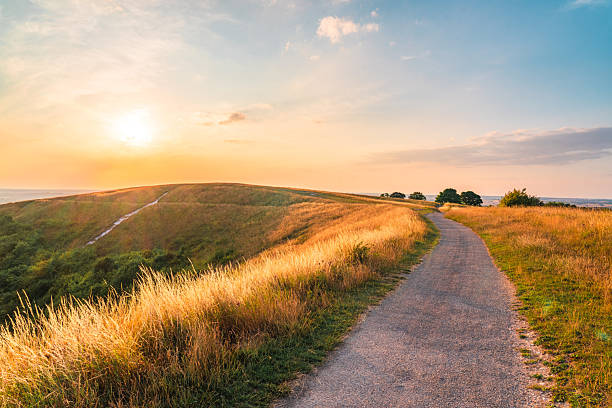
A river, a coast, an open field or a hilltop — spaces with a wide view or the sound of water offer a different quality from enclosed parks or streets.
Finding outdoor time in a busy life
Many people find that the obstacle is not motivation but logistics — the day is full and outdoor time feels like something that requires a gap that never arrives.
Small adjustments — choosing a longer route to work, eating lunch away from a desk, or ending a phone call while walking outside — create outdoor moments without requiring extra time. The environment changes, even if the activity stays the same.
Informational content
All materials and practices presented here are educational and informational in nature and are intended to support general wellbeing. They do not constitute medical diagnosis, treatment, or recommendation. Before adopting any practice, especially if you have a chronic condition, please consult a qualified medical professional.